
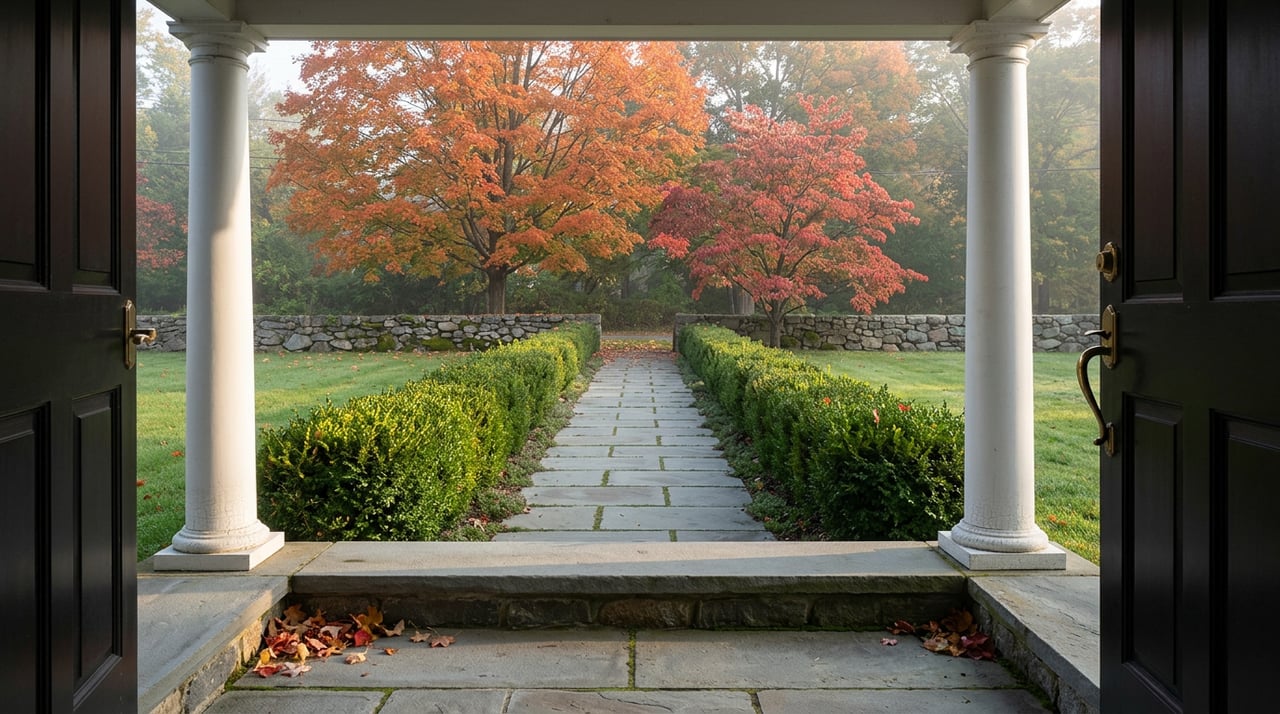
Walk the perimeter trail at Walden Pond on a Saturday in July and you will share it with towel-draped swimmers, a line for the parking lot, and a replica cabin most people photograph without stopping. Walk that same trail in October and the crowd thins to almost nothing, the maple canopy along the shoreline turns, and the person standing at Thoreau's house site might actually be Henry David Thoreau, or at least the closest thing Concord has to him these days.
That person is new. For the first time in 25 years, the man Concord residents think of as the pond's resident Thoreau is not Richard Smith. It is Brent Ranalli, a historian who lives one town over in Boxborough, and the handoff happened quietly enough that plenty of longtime residents have not clocked it yet.
A Quarter Century Changes Hands
Richard Smith spent 25 years as the official Henry David Thoreau interpreter at Walden Pond State Reservation before stepping back this year. He told WBUR he wanted to stop before he stopped loving the role, and that he was ready to put his own voice back into his writing instead of Thoreau's. New Year's Day 2026 marked the first day Ranalli spoke publicly as the new Thoreau.
Ranalli did not arrive as an outsider. He had been filling in for Smith occasionally for close to a decade, including performances for Concord school groups, before the state's Department of Conservation and Recreation made the role official. He works full time as an environmental policy specialist and edits the Thoreau Society Bulletin, which means the beard and the wool coat are a sideline for someone who has spent close to two decades studying Thoreau's writing, his walking habits, and even the disputed question of whether he served in the Concord militia.
Jacqui Kluft, who works at Walden for the DCR, pointed to one detail that sealed the choice: Ranalli plays the flute, the same instrument Thoreau favored. It is a small fact, but it says something about how the role gets filled. This was never a casting call for an actor who could wear the outfit. It was a search for someone who already knew Thoreau well enough that putting on the coat was almost incidental.
The Job Is Answering, Not Performing
Most people picture a historical interpreter as scenery, someone you photograph from ten feet away and move on. That is not how this role works at Walden. Ranalli told The Concord Bridge he is ready for any question, whether it comes from a second grader or a retiree who read "Walden" in college and never quite let it go. He has fielded questions about what it was like to live alone in a one-room cabin, and at least once, what kind of car Thoreau drove. The first automobile was not built until after Thoreau's 1862 death, which gives you a sense of the range Ranalli has to cover.
Part of the job is gently correcting the record. Thoreau was not a hermit. He walked into Concord village regularly, ate meals with his family, and had his mother do his laundry, a detail people love to needle him for. Ranalli's response gets at something most casual readers miss about mid-1800s domestic life: "We don't criticize him for not repairing his own shoes." Washing clothes in the 1840s required real skill, not less of it than cobbling.
The role also connects to something a lot of Concord parents already know without thinking much about it. Allison Forseter, the elementary curriculum coordinator for Concord Public Schools, has brought second graders to meet "Henry" at the pond for years as part of a standing class trip. She has said Ranalli embodies Thoreau's spirit convincingly enough that the tradition survived the handoff without missing a beat.
And the character draws people from well beyond town. In July, a visitor from China brought flowers to "Henry" after learning the interpreter would be at his post for Thoreau's birthday. Ranalli calls it a kind of parasocial relationship people build with a book that has outlived its author by more than a century and a half. Thoreau put it more plainly in "Walden" itself:
"I went to the woods because I wished to live deliberately."
That line is why people still show up with flowers 180 years later.
Why Fall Is the Season That Actually Works
Walden Pond draws close to 600,000 visitors a year, according to the Friends of Walden Pond, and the overwhelming majority of them come for the swimming. On the busiest summer days the lot fills to capacity and rangers turn cars away at the gate, a detail longtime residents already know from experience if they have ever tried to swing by on a July afternoon without checking ahead.
Fall changes the math. The swimmers leave, the lot empties out, and the DCR's interpretive programming keeps running on a schedule built for people who actually want to slow down and look at the woods rather than cool off in them. The September and October 2026 program calendar includes a ranger-led half-mile walk to Thoreau's original house site, built around reading a forest's age and history from its current tree composition, plus a running Saturday program on what animals have called the pond home since Thoreau's stay in the 1840s. None of it requires the kind of arrival-time strategy summer visits demand.
Ranalli himself only shows up in character a handful of times a year, tied to specific occasions like Thoreau's birthday and the DCR's seasonal calendar, so there is no guarantee of catching him on any given walk. But the odds of a genuinely quiet, unhurried visit go up considerably once Labor Day passes, whether or not "Henry" happens to be standing at the house site that day.
What This Says About the Town, Not Just the Pond
Concord's identity leans hard on writers who have been dead for over a century, and it would be easy for that to calcify into something static, a plaque and a gift shop. The Ranalli handoff argues the opposite. The role gets passed from one deeply invested local historian to another, each one spending years absorbing the material before ever putting on the coat, and each one fielding the same unpredictable mix of questions from second graders and international visitors alike. That is not a museum exhibit. It is closer to an ongoing conversation that Concord has decided to keep having, in public, at the edge of a pond, for as long as someone is willing to do the studying it takes to hold up their end of it.
If you already live near the pond, this fall is a good excuse to walk the loop again and see what a quieter Walden actually feels like. If you are weighing whether Concord is the kind of town where local institutions get treated with this much care, this is as good a data point as any.
For residents with questions about the Concord market, or anyone thinking through a move into a town that takes its history and its home values equally seriously, the Nancy Cole Team knows this place from the inside. Reach out to request a confidential market consultation whenever you are ready to talk.