If you have ever looked at homes in Concord and thought, these houses feel different, you are right. In Concord, architecture is tied closely to the town’s history, rural landscape, and preservation priorities, so the style of a home often tells you something about how it lives day to day. Whether you are buying, selling, or simply trying to better understand the local market, this guide will help you read Concord’s classic home styles with more confidence. Let’s dive in.
Why Concord’s Home Styles Stand Out
Concord’s housing story is deeply connected to preservation. The town recognizes five local historic districts: Barrett Farm, American Mile, North Bridge/Monument Square, Main Street, and Hubbardville. Concord also describes these areas, along with Minute Man National Historical Park, as connected cultural landscapes with layers of meaning across the village center, rural roads, and neighborhoods.
That context matters in everyday real estate decisions. Concord estimates that about 1,260 homes, or roughly 14% of total buildings, are in historic districts or subject to demolition review. For you as a buyer or seller, that means a meaningful share of the housing stock comes with architectural character and, in some cases, added review considerations.
Colonial and Federal Roots
Many of Concord’s most recognizable homes trace back to early New England forms. Historic New England describes these houses as wood-framed buildings with clapboard or shingle exteriors, steep roofs, and central chimneys. In Concord, the town’s own design guidance identifies Federal and Colonial Revival as styles commonly seen locally.
What Colonial-style homes look like
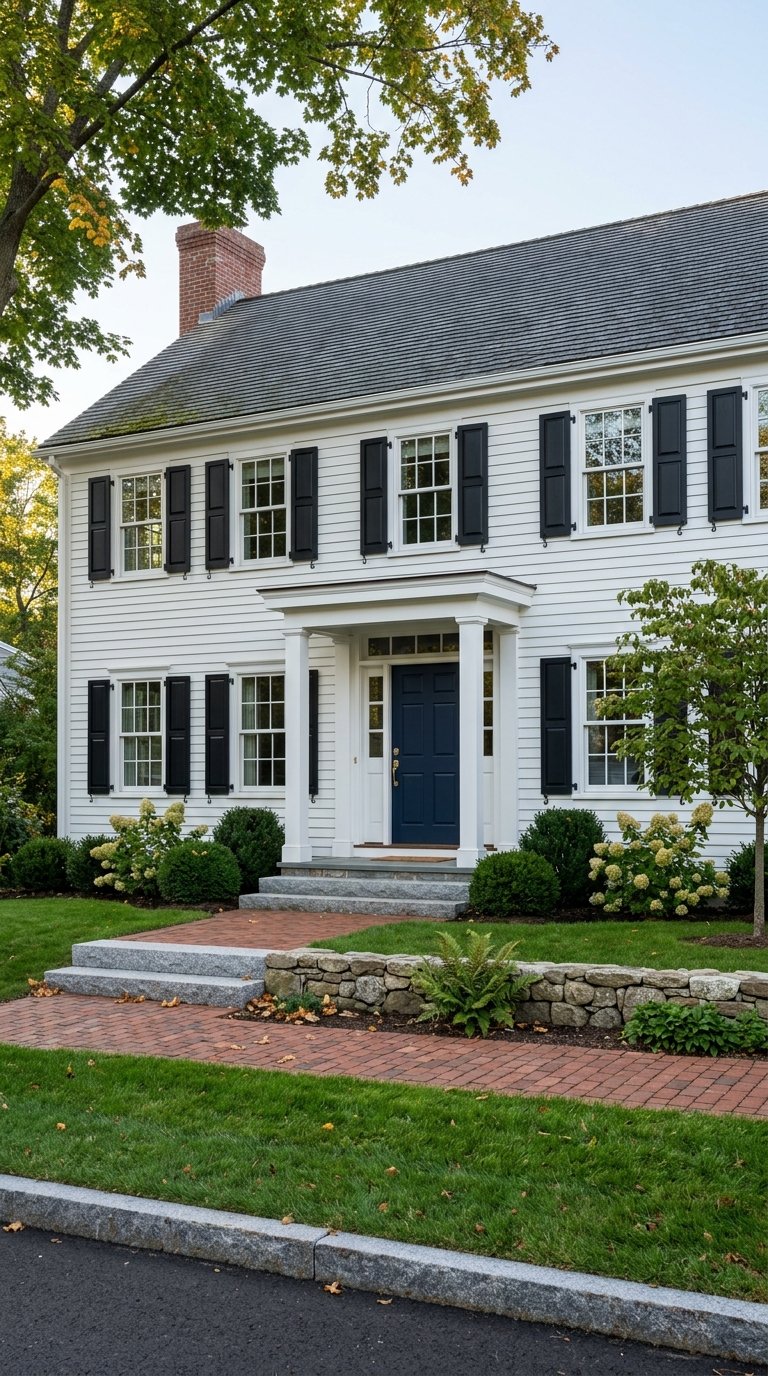
Georgian homes are usually symmetrical, two rooms deep, and organized around a center hall. Federal homes often keep that symmetry but tend to feel lighter and more refined, sometimes with round or elliptical spaces and projecting wings. Colonial Revival homes borrow many of the same visual cues, such as centered doors, multi-pane windows, and classical surrounds.
For you, the easiest clue is often the front façade. If the house feels balanced and formal from the street, there is a good chance it has Colonial, Georgian, Federal, or Colonial Revival roots. That symmetry is one of the clearest visual signatures in Concord.
How these homes live
Older Georgian and Federal homes often have a more formal first floor and a clearer separation between public and private rooms. The center hall and two-room-deep layout shape how you move through the house. Compared with many newer suburban homes, these interiors may feel more defined and less open.
Colonial Revival houses often keep the traditional exterior language but open up the interior more than the older originals. So if you love the classic Concord look but want a floor plan that feels a bit more flexible, this style can be a useful middle ground.
Farmhouses and Land-Oriented Living
Concord still sees farming as part of the town’s identity, and that shows up in its housing. In rural historic districts, the setting often includes open fields, cultivated land, water features, and fieldstone foundations. Concord’s preservation goals for Barrett Farm also emphasize the agrarian landscape and the importance of preserving it.
What to expect from a farmhouse
A classic New England farmhouse is often a compact wood house with practical room arrangements. Some are two stories with a central chimney and two rooms per floor. The emphasis is usually on function, connection to the site, and a relationship to surrounding land.
A related pattern is the connected farmstead. In this arrangement, the main house may link to an ell, woodshed, barn, or other outbuildings. In Concord, that can create a property that feels tied to a larger working landscape rather than just a single residential lot.
How farmhouse properties feel
Buyers often notice larger lots, stone walls, barns or sheds, and long views. These homes can feel more land-oriented than street-oriented, especially in rural areas where the house is part of a broader setting. If you are comparing homes, that difference can be as important as square footage.
For sellers, this is also an important positioning point. A farmhouse in Concord is often about more than the structure itself. The setting, outbuildings, and relationship to the land can be central to how buyers understand the property.
What “Antique” Means in Concord
In Concord, the word antique does not point to just one architectural style. The town’s design guidelines note that some buildings are pure examples of a style, while others are eclectic or heavily modified over time. Owners often updated homes to reflect changing tastes, which means many older houses show multiple design layers.
Why antique homes vary so much
An antique Concord home may start with Colonial or Federal bones and later pick up Colonial Revival or other details. That mix is part of what gives many older homes their appeal. Often, the charm comes from age, scale, proportion, and visible evolution rather than a perfect textbook style label.
If you are shopping in Concord, it helps to think of antique homes as living histories. They may not fit neatly into one category, but that does not make them less valuable or less authentic. In many cases, those layers are exactly what make the home memorable.
Newer Custom Homes in Concord
Concord is not only a market of older homes. There are newer custom builds as well, especially in areas where more recent construction is present. Even then, the town’s design guidelines expect new homes to be in harmony with the surrounding site and streetscape.
How newer homes fit the town
Concord says new structures should not detract from the historic district and should use scale, massing, and materials that fit nearby buildings. The town also points to contemporary buildings that work well without directly copying older neighbors. In practice, that means a successful newer home in Concord usually feels context-sensitive.
For you as a buyer, a newer custom build may offer a more current floor plan and easier day-to-day functionality. At the same time, the visual expectation is that it should still belong in a New England setting. The question is often less about whether the home is old or new, and more about whether it feels appropriate to its site.
How Style Affects Floor Plans
Concord’s classic home styles are not just about curb appeal. They also shape how daily life unfolds inside the house. Understanding that can help you decide which type of property best fits your routines and priorities.
Room-by-room living in older homes
Older Concord homes often organize space around individual rooms instead of one large open area. Earlier houses may be one room deep with a central chimney and an L-shaped stair. Georgian and Federal homes typically use a center hall with rooms arranged front to back on each side.
This layout often creates a more layered and private feel. Some buyers love that sense of separation and formality. Others may prefer a more open layout, which is why Colonial Revival and newer custom homes can be appealing alternatives.
Site matters as much as the house
In farmhouse settings, daily living is often shaped by the land as much as the floor plan. Open fields, stone walls, barns, and long views can create a very different experience from village-center living. In Concord, the setting is often part of the architecture story.
Maintenance and Update Considerations
If you are buying or preparing to sell an older Concord home, maintenance is not a side issue. It is part of the property’s value, appearance, and marketability. Concord’s preservation guidance gives clear direction on how older homes should be handled, especially in historic districts.
Windows and exterior materials
The town says historic windows should be retained and repaired when possible. If replacement is unavoidable, the new unit should match the original in size, sash pattern, materials, and trim. Concord generally discourages vinyl, aluminum, and metal replacement sash in historic districts.
The guidelines also recommend traditional materials such as wood, stone, stucco, slate, brick, and copper for repairs and new work. For buyers, this is useful to know before taking on a project. For sellers, it helps explain why thoughtful upkeep can carry real weight in the market.
Additions and changes
Additions to older homes are another major consideration. Concord says additions should be secondary to the main building, differentiated rather than identical, and set back or less visible when possible. New work should complement the original house in size, scale, style, and materials.
That guidance can affect how buyers think about future expansion. It can also shape how sellers present past improvements. A well-integrated addition often supports value because it respects both the original house and the broader setting.
Sustainability and review
Concord also connects older-home stewardship to sustainability. The town says improving existing housing stock is essential to its greenhouse gas goals. It also notes that work in historic districts can require review for changes such as window replacement or rooftop solar.
This is one reason local knowledge matters in Concord. The details of a house’s age, location, and district context can influence what updates are straightforward and what may need more planning.
Key Terms That Help You Read Listings
When you understand a few common terms, Concord listings become easier to decode. Here are some of the most useful ones.
- Center-entry or center-hall: A balanced front elevation with the entry in the middle, common in Georgian and Federal houses.
- Two rooms deep: Rooms are arranged front to back on both sides of the hall, usually creating a more formal plan.
- Central chimney: An older New England heating pattern that often points to an earlier house form.
- Ell: A connecting wing between the main house and another structure, often seen in farmstead layouts.
- Eclectic or hybrid: A house that mixes styles or reflects changes made over time.
A simple way to compare Concord homes is this: symmetry and hall-based circulation often point to Colonial, Georgian, or Federal roots; barns, stone walls, and a rural setting often suggest farmhouse character; and layered details often signal an antique that evolved across generations.
Why This Matters When You Buy or Sell
In Concord, style is not just an aesthetic detail. It affects layout, upkeep, renovation choices, and how a home is positioned in the market. A buyer deciding between a formal center-hall Colonial and a connected farmhouse is often choosing between two very different ways of living.
For sellers, understanding style helps shape pricing, preparation, and presentation. Buyers respond strongly when a home’s architecture, setting, and updates are clearly understood and thoughtfully presented. In a town where preservation context is so visible, that clarity can make a meaningful difference.
If you are thinking about buying or selling in Concord, working with an advisor who understands both the architecture and the market can help you make smarter decisions. To start a conversation, reach out to Nancy Cole.
FAQs
What are the most common classic home styles in Concord, MA?
- Concord commonly features Colonial, Georgian, Federal, Colonial Revival, farmhouse, antique, and newer custom homes that are designed to fit their surroundings.
What does “antique home” usually mean in Concord real estate?
- In Concord, “antique” is usually a broad term for an older home that may combine features from multiple architectural periods rather than representing just one pure style.
How do Concord Colonial and Federal homes usually differ from newer homes?
- Older Colonial, Georgian, and Federal homes often have more formal, room-by-room layouts, while newer homes and some Colonial Revival houses may offer more open interior plans.
What should buyers know about maintaining a historic home in Concord?
- Buyers should know that Concord encourages repair of historic features when possible, favors traditional materials, and may require review for certain exterior changes in historic districts.
How can you tell if a Concord home has farmhouse character?
- Farmhouse properties in Concord often show a strong connection to the land through larger lots, stone walls, outbuildings, open fields, or connected wings such as an ell.
Why do Concord home styles matter when selling a house?
- Home style matters because it affects how buyers understand the layout, setting, upkeep, and overall appeal of the property, which can influence preparation and market positioning.